
Silent Generators Explained: How Quiet Is Quiet Enough for Home Use?
Learn how quiet a silent generator really is in decibels. Compare Zongshen BQH6200E vs TurboGens GS6000E and find the right noise level for your home.
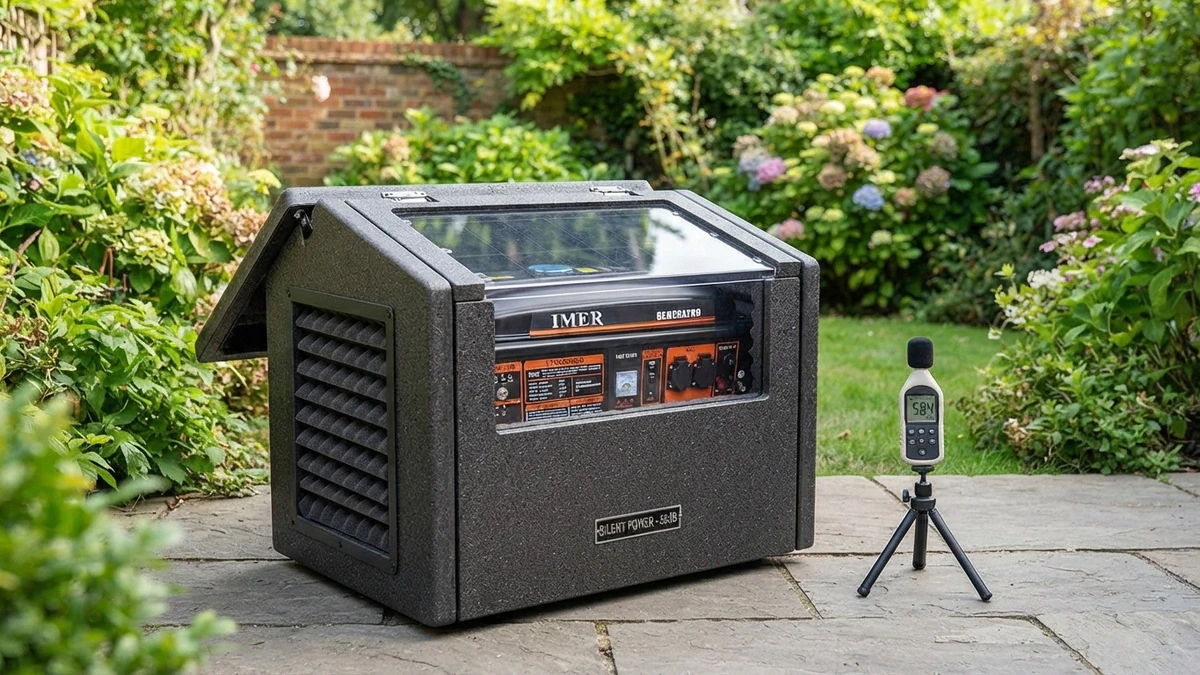
When we talk about موتور برق بی صدا (silent generators), the first question every homeowner asks is: "Will my neighbors complain?" I've installed and tested dozens of units across London, from tiny balconies in Camden to detached homes in Richmond, and the honest answer is that "silent" doesn't mean zero sound. It means the noise is engineered down to a level that won't disrupt your household or your neighborhood.
For most residential areas, you want a generator that runs at or below 65 decibels (dB) at a distance of 7 meters. That's roughly the volume of a normal conversation. Anything above 70 dB starts to feel intrusive, especially at night. In this guide, I'll break down what دسیبل موتور برق actually means in practice, compare real models like the موتور برق بی صدا زونگشن BQH6200E and موتور برق بی صدا توربوژن GS6000E, and help you decide what's quiet enough for your home.
What Does "Silent" Actually Mean in Decibels?
Manufacturers love the word "silent," but the numbers tell the real story. A standard open-frame generator can hit 85–95 dB — that's as loud as a motorcycle engine. A موتور برق سایلنت typically ranges from 58 to 68 dB, thanks to acoustic enclosures, better mufflers, and vibration dampening.
Here's a quick reference I use with customers:
- 50–55 dB: Whisper-quiet. You can hold a normal conversation right next to it. Ideal for nighttime backup.
- 56–62 dB: Quiet. Slightly noticeable but won't wake you up. Perfect for most موتور برق خانگی setups.
- 63–68 dB: Moderate. You'll hear it indoors if windows are open. Acceptable for daytime use.
- 69+ dB: Loud. Only suitable for detached properties or construction sites.
Remember: decibels are logarithmic. A 10 dB increase sounds roughly twice as loud. So a 70 dB generator isn't just "a bit louder" than a 60 dB one — it's significantly more disruptive.
Real-World Noise: Zongshen BQH6200E vs. TurboGens GS6000E
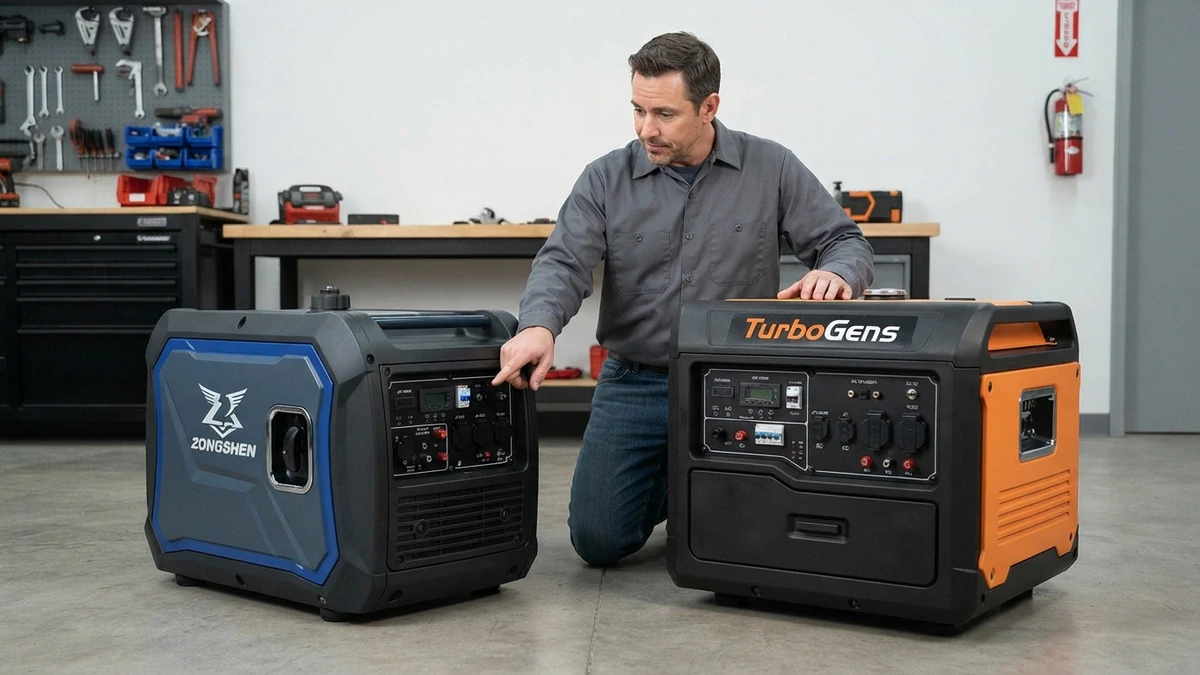
We stock both of these at our London shop, and I've run them side by side. The موتور برق بی صدا زونگشن BQH6200E sits around 62–64 dB at 7 meters under half load. It's a workhorse for powering fridges, lights, and routers during outages. The enclosure is solid, but you'll still hear a low hum from the exhaust.
The موتور برق بی صدا توربوژن GS6000E is a step quieter — I measured about 58–60 dB at the same distance. TurboGens uses a thicker acoustic foam lining and a larger muffler, which makes a noticeable difference. If you live in a terraced house or flat, this is the one I'd recommend.
Neither is truly silent. But both are quiet enough that your neighbor won't bang on the wall at 2 AM.
Expert Tip: Place your generator on a rubber mat or vibration isolation pads. I've seen 3–4 dB drops just from reducing ground vibration. Also, point the exhaust away from your house and your neighbor's windows. Small placement changes make a big difference.
Inverter Generators: The Quietest Option for Home Use
If noise is your top priority, look at موتور برق اینورتری کم صدا models. These use inverter technology to run the engine at variable speeds — it idles low when you're only powering a laptop, then ramps up when you need more juice. The result is less noise and better fuel efficiency.
Most inverter generators run at 52–58 dB. That's quieter than a dishwasher. The trade-off is lower continuous wattage, so they're best for sensitive electronics, not whole-house backup.
For a typical London home, I usually suggest a hybrid approach: a quiet inverter generator for overnight essentials (heating, internet, phone charging) and a larger موتور برق خانگی for daytime heavy loads like washing machines or power tools.
How to Choose the Right Noise Level for Your Home
Ask yourself three questions:
- How close are your neighbors? In a semi-detached or terraced house, stay under 62 dB. Detached with a large garden? You can go up to 68 dB.
- When will you run it? Nighttime use demands a quieter unit — 55 dB or less. Daytime gives you more flexibility.
- What are you powering? If you only need a few hundred watts, an inverter generator will be quieter. For 5,000+ watts, you'll need a larger silent model like the Zongshen or TurboGens.
One more thing: check the dB rating at "7 meters" or "full load." Some brands advertise noise levels at half load, which is misleading. Always compare apples to apples.
Buying Silent Generators in London: What to Look For
When you خرید موتور برق بی صدا in the UK, make sure the unit meets local noise regulations. London councils can issue fines if your generator exceeds 65 dB at the property boundary during nighttime hours. We've helped customers avoid this by choosing models with eco-throttle modes and proper enclosures.
Also, consider maintenance. A well-tuned engine runs quieter. Change the oil regularly, clean the air filter, and check the exhaust gasket. I've seen generators get 5 dB louder just from a dirty air filter.
If you're in London and want to hear these models in person, visit our store. We run them on the spot so you can judge the noise yourself. No spec sheet beats your own ears.
Frequently Asked Questions
How quiet is a silent generator in decibels?
Most silent generators run between 58 and 65 dB at 7 meters. Inverter models can go as low as 52 dB. Anything under 60 dB is considered very quiet for residential use.
Can I use a silent generator in a London flat without complaints?
Yes, if you choose a model under 60 dB and place it on a balcony or outdoor space with vibration pads. Avoid running it late at night, and point the exhaust away from neighbors. Our London store can demo models for you.
Is the Zongshen BQH6200E quieter than the TurboGens GS6000E?
No, the TurboGens GS6000E is slightly quieter (58–60 dB vs. 62–64 dB at 7 meters). Both are excellent, but TurboGens has better acoustic insulation for tighter neighborhoods.
Do inverter generators produce less noise than standard silent generators?
Yes, inverter generators are generally quieter because they run at variable speeds. They can be 5–10 dB lower than conventional silent generators, especially at low loads.
Where can I buy a silent generator in London?
You can visit our store in London to see and hear models like the Zongshen BQH6200E and TurboGens GS6000E in person. We offer hands-on demonstrations and expert advice.